May 6, 2009

Tony Hseih on Zappos Culture

Tony Hsieh

Download Audio File [link]

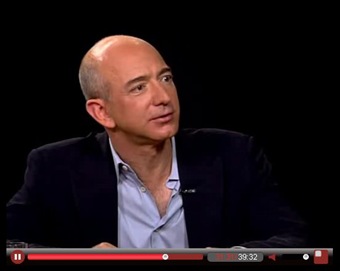
In this presentation at the Web 2.0 Conference, Zappos.com CEO Tony Hsieh talks about his first business selling pizza in college, starting Link Exchange after college, and how he eventually ended up leading Zappos as the CEO.  Tony discusses how his experience at Link Exchange influenced him to focus on corporate culture as a top priority, and why he thinks culture is so important to a company’s future growth and success.

Tony talks about the internal vision of Zappos not just to be an Internet footware merchant, but to be a brand that is known for an excellent customer experience.  He goes on to list a number of specific techniques that the company uses to enhance customer service, and explains why he thinks that the telephone is still one of the best branding devices available.

How do you define culture?  Tony talks about some of the core values of Zappos, and why it’s important to have values that aren’t just a plaque on a wall.  These values permeate every aspect of the company, and Tony details some of the hiring and training practices that Zappos uses to ensure that every employee fits into the corporate culture.

Mar 23, 2009

I read this good post on Peter Bregman's How We Work HBP blog that made a lot of sense to me on multiple dimensions. 

Some of my take aways :
  • More often than not, the secret to customer loyalty lies in the little wows that you can generate across the customers' experience of your product or service. 
  • The web of little wows across the experience life cycle involves contribution from across your workforce - thus making it harder to implement. And harder to copy & replicate too - thus a sustainable competitive advantage. 
  • A CIO I recently met was explaining about how his IT service help desk is the entry point for new IT graduates into his organization. Questioned on how he attracts top quality graduates into a help desk role, he answered that he looks at candidates for what they could be in the future - technical architects, business analysts, etc. - rather than just their fit into the help desk role. This potential based perspective also governs the way these candidates are treated & groomed at their first job. Sounds quite similar at Four Seasons too - potential to grow, potential to move to another resort, etc. 
  • Great way to build trust - create an opportunity to fulfill a commitment, even when one doesn't naturally exist, and then fulfil it. This can so effectively be used across the experiential lifestyles of a customer. And when not practiced consistently, could just as easily build mistrust too. 
Nice article. 

Feb 24, 2009

Customer Experience - what lies ahead?

In his article The Future of CE: Post Purchase Experience Creation, Mark Binns brings out an important point -
The future of CE should be in experience creation. As an industry, we will continue to manage customer service and existing experiences, but never get them perfect. I expect the law of diminishing returns will eventually set in on managing existing experiences. So, creation of new experiences will be the true CE differentiator of the future. When something positive and unexpected happens to a customer, it creates instant word of mouth value. People talk about new experiences – they rarely talk about expected experiences unless they were bad ones.
He also goes on explain his theory on opportunities for experience management & creation through the life cycle of the customer interaction. 

On similar lines is this posting by Eric Fraterman. 
True loyalty happens when there is an emotional engagement with the organization or product. This engagement comes from experiencing the brand or organization in a unique way that creates true value for the customer.
How does this apply to an IT product company (esp an enterprise applications vendor) & its customer life cycle?


PreSale
Sale
Implementation
Usage
Support
Upgrade


Feb 3, 2009

Customer perspective during the downturn

The Think Customers 1to1 Blog is carrying a nice post by Brent Leary - So YOU Want to Improve MY Customer Experience?

During the downturn in economy (and always ..but especially so now), all businesses ought to be thinking about what works for their customers. 
  • How have the macroeconomic factors affected our customers business & life?
  • Should we be offering a different value proposition to customers now?
  • What is it that we can do for our customers that no one else will possibly do? 
  • Everyone's expenditure has come down ...so has our customers'. How can we ensure that whatever little they spend is spent on our products / services?
  • Is there a way we can make our customers feel special ..w/o spending too much?
All valid questions even during normal times. But businesses do have extra time now ..so might as well think about customers!

Jan 29, 2009

The Ultimate Question - NPS

A few months ago I started off on a NPS adoption journey. All though I have gone through some of the continual negative press on the topic, I have not heard or read anything compelling enough to drag me away from the simplicity & basic idea of NP. 

We have started really small & getting together the mechanism to capture responses to the NPS query. 

Some questions that I am searching answers for are :
  • What does one do with the NPS score?
  • How can NPS help develop & sustain a customer centric culture?
  • What have been the past experiences (anything specific?) of NPS implementations in B2B situations?
  • What have been the main grouses against NPS?
-----------------------------------------------------------------

From the Blogosphere

Today, hundreds of companies around the world have subscribed to the Net Promoter philosophy. But many of them still don't understand the true meaning of NPS and what Reichheld meant the question to become: an organizational discipline that transforms your business around the customers.
....
Reicheld admitted that companies cannot be driven by scores; it's what they do with the scores that matter most and getting the people in the organization to treat customers the way they'd want to be treated.
....
Until companies can move beyond getting their organizations to reach high Net Promoter scores, and help their CFOs to understand how to quantify and increase the number of promoters, then they won't find success with NPS.

Read the complete article at Think Customers: 1to1 Blog

Nov 10, 2008

Training - Customer Service Excellence

One of the objectives of this blog is to share with all any useful new on the subject of customer strategy. Accordingly, am posting this mail I came across of a training being held across multiple cities in India.

I have no idea on how the program is & I am not recommending the same. Anyone who has attended this or know of anyone who has attended these sessions, please share your thoughts on the same.


==========================================================
iamregnew@gmail.com
iamregistrations@vsnl.net
==========================================================

Nov 4, 2008

Product centricity to customer centricity

(Photo Courtesy: Purdue University)

In her blog today, Patty Seybold shares a commentary about where organizations go wrong in the journey from product centricity to customer centricity. In Graham Hill's own words -
"The stages start with pure product-centricity. This typically evolves through the development of internal networks of colleagues who need to work together to deliver the value proposition; to cross-functional teams that formalise the collaboration of the internal networks; to a customer segment coordinator who takes on formal responsibility for collaboration across different teams; to a matrix organisation with nascent segment teams reporting to both product and customer management; and finally to bona fide segment managers responsible for all aspects of segment experience delivery. The vertical silos of product-centricity have given way to the more connected, more collaborative customer-centric organisation."
The key phrases (for me) from the above are :
  • work together to deliver the value proposition (ought not to loose sight of this)
  • formal responsibility for collaboration across teams (in the absence of a culture that fosters team work)
  • responsible for all aspects of segment experience delivery (key enabler - accountability)
As important as the end result is, the journey & the milestones involved are as or more important in ensuring effectiveness & sustainability of the end state. 

Nov 3, 2008

Custommerce - Customer Centric Initiative in India

=============================================
UPDATE (as on 6th Nov 2008)

The folks from custommerce mailed me soon after this blog posting. They have indicated that ways of engaging a wider community for this movement has been discussed in the Kovalam conclave. And they will have some concrete steps soon. 

=============================================

custommerce - Strategies for a Customer-Driven Economy

Vision: A customer experience driven globally competitive Indian economy. 


The above mentioned vision statement has prompted me to check on this initiative a couple of times earlier. On trying the join custommerce call for action, a response seem to have emanated from the sales desk of Servion. Though custommerce is termed as a movement, no answers are forthcoming about how I can be a part of the same. 

To be fair, I did receive a notification about their latest conclave in Kovalam. Presentations from the conclave are also available at their site. The presentation Customer Centricity: Challenges in Getting Top Management Buy-in is an interesting topic & on target. 

Still trying to figure how best to contribute to the movement though.

Oct 23, 2008

Quality - The Customer Centric Type

Intangible Quality: Engage in the Third Quality Revolution

(Courtesy: www.istockphoto.com)

Found this interesting article on Intangible Quality on RocketPosts - nice read. 
Some of my take aways -
  • Want to create products that meet the subconscious wants and needs of our customers. We want the customer, upon experiencing our products, to say, “This is exactly what I always wanted. This is what I have always needed. I cannot imagine what life was like before I had it.” 
  • Seeking quality that pleases the customer in ways he never before even imagined.
  • It is a concept of quality that falls into an almost spiritual realm. It means creating a product, or providing a service, that profoundly affects the customer. It is not only defect-free, but it is exactly what the customer has always desired.
  • Intangible quality requires a new model of customer awareness— one that includes continuous, meaningful contact, and a spiritual connection with a customer’s needs. In effect, you must become a virtual employee in your customer’s organization—seeing what he sees, understanding what she understands. Then, you must use this knowledge to develop possibilities of which the customer has never before dreamed. In a world where Six Sigma is commonplace, the goal of profoundly affecting your customer is the next quality battleground.
Some of the examples quoted in the article allude to concepts O'Reilly uses for the Web 2.0 definition (usage of data to improve customer experience - eg. Amazon, usage of CRM, etc. 

#1 Novartis initiates customer centricity initiative

Bloggers & pundits alike are saying that the tough economic situation would prompt many companies to get onto the customer focus bandwagon. True to their words, Novartis has announced its restructuring plan to implement many initiatives - Customer Centricity being one of them. 


  • to implement a new regional US business model that will better address customer needs and differences in local market dynamics. 
  • is designed to be more effective at driving sales growth by better meeting the diverse needs of multiple customers as well as a more efficient deployment of resources

Oct 6, 2008

Gandhi on Customers

------------------------------------------------------------------------------------
Intended for this to be a Oct 2 (Gandhi's birthday) post. Better late than never.
I also know that I have mentioned this before. But then, there are still many who haven't learnt from this.
------------------------------------------------------------------------------------

A customer is the most important visitor on our premises. He is not dependent on us. We are dependent on him. He is not an interruption to our work. He is the purpose of it. He is not an outsider to our business. He is a part of it. We are not doing him a favour by serving him. He is doing us a favor by giving us the opportuity to do so.

- Mahatma Gandhi -

Sep 30, 2008

Amazon executives on same page wrt Customer Centricity

While talking about corporate creativity, Amazon CTO Werner Vogels mentions about Amazon wanting to be the world's most customer centric company. The same theme can be read & heard in quite a few of Bezos' interviews as well.

Note that the Amazon executive team seems to be on the same page wrt their overarching goal. Once this is clear, as Vogels mentions, all other decisions become more abvious & actions that much easier.

Other posting on the subject:

Sep 26, 2008

Recognize the unmeasurables

Check out this article by Jim Barnes on CustomerThink. I would guess that the article will strike a chord in most customer focus practitioners. My takeaways from the article -
  • We need some way to measure, capture and observe the softer elements of performance, those that involve how well employees interact with customers and how they influence the quality of the customer experience.
  • Organizations will increasingly have to ask: What kind of performance drives loyalty and positive customer relationships? And how do we encourage such performance?
  • Customer-tracking research and feedback must include questions that tap into how friendly, helpful and understanding employees are in dealing with customers; how they do at making customers feel comfortable and listened to; how well they instill trust and confidence in our brand, how well they diffuse confrontational situations, and over all how they make customers feel toward the company.

Sep 22, 2008

Anand Mahindra Speech at Nasscom Leadership Summit 2008

I have had this on my 'must read' list for a loong time now. Finally got to read it today. Nothing ground breaking ..but the reemphasis of a few points is worth it.


One of the tasks we at the Mahindra Group have set ourselves is to aspire to be recognized as the most customer-centric organization in India, and why not, in the World! In order to walk the talk, every time I’m asked to speak at a conference, I have made it a default option to ask what the audience–my customers–might expect of me.

And so I found myself wondering what this conclave of IT wizards expects from a predominantly right-brained character like myself. You certainly haven’t called me here to deliver a sermon on technology. And I wouldn’t even risk doing that with Nandan (Nilekani) and Kiran (Karnik) sharing the dais!
Of course, I might have been able to do that by getting one of my IT colleagues to write this speech, but then it would have been comprehensible to you, but incomprehensible to me!
And although the title of this session is ‘Building a Knowledge Economy for Growth’, I believe that

a) All of you out there have helped build the foundations of a knowledge economy, so again, you don’t need me to pontificate to you about that and

b) I think there are some urgent pressures and imperatives the industry has to deal with at this point.

So, I’m going to talk about something completely different: I will talk about the Trimurti.
Most of the Indians in this audience will know the Trimurti - the trinity in Indian mythology of Brahma the creator, Vishnu the sustainer and Shiva the destroyer. There is a wonderful depiction of this in stone, just ten kilometers across the bay, at Elephanta. Both as a businessman, and as someone who tends to see life in visual images, the Trimurti reminds me of India’s IT industry. Think of it.

You people have gone through a stage, where like Brahma, you created something out of nothing. You created a new and global industry. You created a service sector that is today, a major pillar of our GDP. But most importantly, you created a perception of a new India, both in the world and in Indian hearts and minds.

CK Prahalad once told me that in universities in America today, there are almost unfairly high expectations from Indian students, because there is a huge perception that all Indian students are brilliant, outstanding. You created that perception. And within India, what you created was self-belief. You showed us what Indians could do, and now the rest of India believes that Indians can do anything. Brahma created a physical landscape; you sowed the seeds of a new mental and psychological landscape. In that sense, you are truly the Brahmas of the age of liberalisation.

But creation is only the first phase. You then have to move on to the next phase of sustaining that creation - to the realm of Vishnu the preserver. Creation is a one-time affair. Sustaining that creation is obviously a longer haul, subject to many attacks and crises. Perhaps that is why Vishnu comes not in one, but in ten incarnations.

Every time there is a new danger, he changes his avatar to a form best suited to meet that danger. At various times he has come as a fish, as a tortoise, as a dwarf. But his most interesting avatar came when he had to fight the demon Hiranyakashyap. Hiranyakashyap was a bad guy, who had obtained an amazing boon from the gods. Neither man nor beast could kill him; he could not be killed by daylight or at nighttime, within his home or outside it, on the ground or in the sky. All this made him pretty invincible - he went on a rampage, and only Vishnu could tackle him.

The IT industry today faces challenges every bit as complex as those Hiranyakashyap posed for Vishnu. It is hit by a macroeconomic tsunami of adverse currency changes, rapidly escalating costs in both salaries and infrastructure and inadequate talent pools below the tier 1 and 2 institutions.

At the Company level, firms are beginning to feel the penalties of poor differentiation and lack of focus (trying to be all things to all people); and an over-emphasis on high volumes and price competition. Suddenly, the industry seems to have fallen off its pedestal; You are facing your very own Hiranyakashyap.

It’s interesting to see how Vishnu dealt with him. How do you destroy someone who can’t be killed by man or beast, inside or outside, by day or night etc etc. The demon pretty much had all bases covered. So Vishnu took on the Narasimha avatar to bypass the boon. Narasimha was a hybrid creature, half man half lion, and therefore neither man nor beast. He killed Hiranyakashyap at twilight, which is neither day nor night. He killed him in the courtyard, which is neither inside a house nor outside it. And he killed the demon by placing him across his knee and tearing him apart, thus circumventing the terms of the boon that he could not be killed either on the ground or in the sky. Now that’s what I call an innovative algorithm!

So what are the lessons for the IT industry in this story? Well, the first thing Vishnu did was to reinvent himself. It was not the gentle and contemplative Vishnu who fought Hiranyakashyap - it was the fearsome Narasimha avatar. Vishnu reinvented himself to suit the circumstances. The circumstances have changed drastically. Reinvent yourselves.

Do I have all the answers on the modes of re-invention? No, obviously not, otherwise I’d be out there filing patents, although I can suggest two broad approaches.

First, why don’t we design business models that challenge traditional industry approaches and then transform our organizations, people and processes to execute. If we simply keep knocking on the doors of clients with our traditional offshoring options, we’ll meet the fate of hearing aid salespersons: our best customers won’t hear the doobell!

For example, software-on-demand and open source models changed the rules of the software game. Can we not try to change the rules of the game this time around? Why didn’t we invent Zoom technology or Virtualisation? Thus far, India’s brand of innovation has been identified with the IT industry, but is it truly innovative? Is it really game changing? Ironically, you can now look to the old smokestack industries for inspiration.

A few weeks ago, an Indian car company made a game-changing move. Maybe the Nano will ultimately not retail for a hundred thousand rupees. Maybe it won’t have great margins, or replace as many motorcycles as it would like to, but it was a game changing move; it fired a shot that was heard around the world. Can the IT world make any such claim?

There was an old saying, apparently adopted by the IT industry, that the secret of success is to jump every time opportunity knocks. And how do you know when opportunity knocks? You don’t, you just keep jumping!

So when are we going to stop simply jumping every time a client seems to sneeze, and actually create products and IP that become their own opportunities?

Let’s look at new areas where India may have natural advantage. I remember C.K Prahlad telling us that we didn’t realize how important it was to leverage emerging innovation ecosystems in our country. He gave us the example of how, due to a fortunate coincidence, India’s IT and automotive industries were situated in roughly the same geographic clusters. So why wasn’t, according to Michael Porter’s competitive theories, a world beating automotive telematics industry taking shape here.

Why aren’t IT companies using the massive potential of India’s soft power, the film and TV business to exploit technological dominance of what Telco’s call the ‘last mile’ but is actually the ‘first mile’ in the brave new interactive world?

Secondly, why don’t we try to focus on a vertical industry (e.g., telecom) or horizontal domain (e.g., supply chain management) selecting the key dimensions of competitive differentiation - product vs. service, breadth vs. depth, speed of delivery, customer service responsiveness, fixed or outcome-based pricing, proprietary technology or intellectual property, and so on.
And let’s be prepared to make hard decisions along the way - change people who don’t fit, walk away from businesses that doesn’t fit.

It’s essential, while attempting this, however, to recognize that focus, differentiation and brand building require time and investment. Selling value or doing business differently than the norm tends to elongate sales cycles, which tends to put pressure on cash flow and we need to resist the temptation to broaden our offerings or slash prices just to win the business and keep people busy.

Along with re-invention, during the course of reinventing himself, Vishnu figured out the loopholes in the boon, and regrouped his physical and mental aspects to take advantage of these loopholes. That’s something the IT industry can do as well. Its often been pointed out that in the Chinese word for crisis is also the Chinese word for opportunity. I love that mindset. I truly believe that the adverse rate of the dollar can be viewed as the glass half empty or the glass half full. Sure it affects margins. But it’s also a chance to take advantage of the loophole and buy yourselves what you don’t have, so that you can regroup your structure to meet the challenge.

To me the fact that our currency is more valuable and our price earnings ratios are still higher than average, means that we can acquire the front-ends and the large IT businesses that we never thought we could before. And the bigger the better. If people are egging us on to leapfrog, then they should also cheer as you bid for companies that seem bigger fish than you. It’s happening all the time today in the manufacturing sector-Tata Corus being the stellar example-and we at Mahindra, while starting from scratch, have inorganically compiled together a portfolio of acquisitions that make us the fourth largest steel forging company in the world today.

This is not without historical precedent. If you look at Japan and South Korea, both of them went through a phase of enduring the worlds’ skepticism, then painstakingly building strong and competent domestic businesses, and then on the back of global liquidity support and strong price earnings ratios, compressing time by acquiring global firms and their customer credibility.

In effect, by acquiring the strengths and skill sets you need, you will regroup your profile and create a new entity, which can vanquish your challenges as effectively as Vishnu vanquished Hiranyakashyap.

And finally, while reinventing yourselves, you will have to bring in some of the aspects of the third element of the Trimurti - that of Shiva the destroyer. Destroy for example the premise that cost arbitrage is the way to go. Recognize that the low cost, high volume offshore outsourcing battle has already been fought and won. Often, when strategic frames grow rigid, companies, like countries, tend to keep fighting the LAST war. If you are not already on the winners list, you need to think of other ways to compete on value and differentiation, rather than price and scale.

Destroy the premise that success comes only from size, and desist from comparisons with other Indian companies. There are still many IT companies in India who define success as “we want to be one of the top ten Indian IT companies”. Why not, for example, “we want to be the world’s #1 banking back office solutions provider”?

And lastly, perhaps the time has come to destroy the notion that the world may be your oyster but India is not. There is a huge domestic market in middle class and corporate India that has not been plumbed. Even selling to the bottom of the pyramid is profitable today. But it needs a creative destruction of the current mindset and a re-think on many of the assumptions we hold dear.

So, in conclusion, perhaps there really isn’t that much distance between avatars in the mythological sense and avatars in the technology sense. Perhaps they are both symbolic expressions of the same reality. In their different ways, they both underline the same message - that it is necessary in any situation to reinvent, regroup and re-think our way out of whatever challenges confront us.

I’d like to close with one of my favourite quotes-such a favourite, that I can’t even remember where I first read it:

My father thought the world would be same;
My children, however, wake up
EVERY day thinking the world will be different.
Let’s begin emulating our children. Time to wake up and make the world different.

(Anand Mahindra’s speech at Nasscom Leadership Summit on February 13 th ,2008)

Jul 24, 2008

There might be no end ..but there is always a beginning


Evangelizing customer centricity within my organization, I had a conversation wherein my colleague was highlighting to the various initiatives & plans of action organizations undertake to build customer centricity. He seemed to be aware of a lot many things that people were doing out there - but not done in his own organization. In fact he knew so many, that he didn't know where to begin himself.

I wonder if this is typical of many out there - we can so easily reel out a list of things that people ought to be doing. But when it comes to our own self, we might be non-starters (baked in the squat - as Zig puts it).

There is no end to the things one can do wrt customer centricity. But there is always a beginning. Have you found yours?

May 20, 2008

Partnering vs signing deals

From an Ericsson, Nokia or IBM's perspective, this is a fantastic way to commercially partner with customers than just sign multi-million dollar deals.
With the $ spent coming under pressure due to macro economic considerations, this would be a interesting way for service providers to increase their customer base.

*********************

"In keeping with that underlying philosophy, Bharti Airtel in 2003 signed outsourcing contracts with telecom vendors Telefon AB LM Ericsson and Nokia Oyj as also computer and software service provider International Business Machines Corp., or IBM.

The contracts, which transferred the costs of phone and computer networks to these firms, focused on cutting down costs while at the same time throwing in incentives for better utilization of the infrastructure.Ericsson and Nokia would get a base payment that would be linked to the voice traffic carried by the base stations and exchanges which are the core of a phone network, and would be a paid a pay-per-use incremental charge on that. “This way, there was both an incentive to perform better and a disincentive (that helps) to keep costs down,” chairman Mittal told Mint last year, reviewing the outsourcing deal for Mint. Besides, he had said, “there was no way we would have been able to add 20,000 towers a year (in fiscal 2007) if (we) were doing it ourself”.

An almost similar deal was forged with IBM, which received payments as a percentage of Bharti Airtel’s revenues. The arrangement, according to insiders, has sparkled for IBM — netting it revenues of some $2 billion to date. “Bharti is the most convincing case study (Sam Palmisano) can present to the world,” Mittal said earlier last year, referring to IBM’s chief executive. The vendor has since signed similar deals with India’s Idea Cellular Ltd and Vodafone Essar."

Source: http://www.livemint.com/2008/05/07235634/Sweat-the-buck-more-is-Bharti.html

May 13, 2008

What is a customer centric organization?

A post by a fellow blogger triggered this thought process in me - What is a customer centric organization?

I would believe that the following are some key identifiers of a customer centric organization -

  • customer centricity is a strategic imperative rather than a group or department or annual or marketing initiative
  • the decision making process in the organization places the impact of the decision on the customer as its focal point
  • customer success is a key consideration across the rank & breadth of the organization
  • a strong belief that customer success & customer service is what will eventually lead to organizational profits
  • customer focus is a key element of the organization's culture
  • customer loyalty is constantly & actively sought

May 5, 2008

Customer Loyalty

How do you go about finding what your customers loyalty drivers are?
According to the e-Loyalty Resource site, you could start with the following questions :

Q1. Which product / service features most often make your customer repurchase or recommend your products / services? Its important that loyalty be defined in terms of repurchase, recommendations or active participation in a customer program--it's not just about satisfaction.

Q2. What is the decision/buying process? In other words, what factors, attributes, personal situations, etc. come into play when deciding to repurchase or recommend?

Q3. What makes a customer consider or not consider another brand or buy your product / service despite its higher price? The best source for these answers are your most loyal customers. Ask your best customers why it is they don't consider other brands, or if considered, why they continue to be loyal to you. Remember, if you design for your average customer, you’ll be just that---average!

Q4. How do your customers feel about your management or your company? Do they think you are a leader or are the best in the industry? Do they want to be associated with your company because it makes them look or feel better? Do they think you care about your customers and are responsive to customers? Determining what actions make your customer feel like you care about them is tough, but critical.

Other Resources:

  • This article talks about the various factors - especially relationship based ones.
  • In this article, Bob Hayes delves into ways of identifying your customers' loyalty drivers.
  • An Oracle Siebel CRM white paper on customer loyalty.
  • A case study from Royal Bank of Canada.
  • Kenneth Wallace in his article explains that all businesses are in the C.A.R. business, i.e., Creating Awesome or Awful Relationships & provides his view of the main drivers of customer loyalty.

Apr 28, 2008

Corporations are people

It was that time in the elections where the US presidential candidates took off on corporations. Responding to this phenomenon, Jack Welch in his BW column rightly argues that corporations are nothing but people.
As pointed in another blog post today on the 1to1 blog, this has relevance to B2B marketers too. When corporations make decisions, it has to be understood that it is people behind the scenes who are making these calls. Instead of targeting corporations - think about & target the people who make up the coporations.

Even when focusing on customer satisfaction of these corporations, pick u individual after individual & chase their satisfaction.

Mar 29, 2008

Bootstrapper: 100 tips to create & maintain loyal customers

Bootstrapper has recently published an article that lists resources, tips & learnings to create & maintain loyal customers. Though the listing goes well beyond loyalty, its worth a check

Executive programs on Customer Centricity

Thought I would make a listing of programs run across the globe on the topic -

Mar 25, 2008

Over the last couple of weeks, a business trip too me across 4 time zones / 10 flights / 9 cities in a period of 2 weeks. I have to mention to you an air hostess experience on one of these flights -

A passenger seated next to me was asleep when the air hostess made the "beginning decent - buckle up" announcement. In a few minutes, an air hostess walks up, wakes up my neighbour & tells to buckle up as already announced. Just as he was buckling up, he is curtly told that the announcement also asked passengers to straighten the seats.


A couple of days later, I was on the same airline & came across another similar incident.

This time an air hostess walks up, apologetically wakes up the passenger. Requests him to buckle up & straighten the seat. When the passenger forgot to straighten the seat, the same air hostess returns to courteously requests him to straighten the seat again. She quickly adds that some of the seats have a problem of tilting on their own at times.

Which customer experience do you think will result in the customer having a positive feeling about the airline?
Factually, the air hostess in the first case might be correct. But does anyone want to be reminded about it? How many of us are purely rational?

Feb 26, 2008

BW Customer Service Champs

Business Week has recently released its annual list of customer service champions.
Some of my notes & observations -
  • The list is dominated by car manufacturers & hotels.
  • When anyone mentions car rentals - Hertz is the first name that comes to most people's minds. But Enterprise seems to be ahead in quite a few lists - including this one.
  • Some adopted tips & tricks - 24 hour service chat on the web; freebies - especially car servicing; happy employees leading to superior service; focus on customer's overall experience; involvement of the top execs; etc.

Feb 19, 2008

Why the topic customer centricity?

Over the last 10 years, my profession has taken me across the continents pretty regularly. Though most business travels are forgettable experinces, one part of the journey always resulted in a pleasant experince. Time after time, flight after flight, person after person - it was a consistent delivery of good service. I am referring to my travel with Jet Airways.
Jet Airways, I believe, revolutionized air travel in India. Not only did they end the hegemony of the state carriers (Air India & Indian Airlines), they also introduced quality service (usually associated with 5-star hotels) into air travel. Their service always stood above the rest - a distinct differentiator & contributed significantly to its stickiness to its customers.

(Photo credit to http://www.sxc.hu/index.phtml)

A differentiator not only for the airline, but also for the Indian service economy. With the increasing size of this economy, it is very important for the industry to inculcate principles of experince based differentiation to build itself a strong foundation based on customer relationships & establish itself as a world beater.

I would be very happy if this blog contributes even a bit in this endeavour!

Feb 12, 2008

Even Goliath embraces customer centricity

In this CNET article, Tom Krazit explains how Intel is turning a new page (a page out of its competitors strategy book) & becoming more customer centric. Even the behemoth recognizes the need to be customer centric.

You would think Intel with its market share & clout can push its way through. Pushing did work for a while, but then things changed - competitively & in their customers' markets. Intel is now going out of its way to understand how it can help its customers win by differentiating themselves.

It becomes interesting when you realize that the PC manufacturers are all trying to differentiate themselves using the same chip maker - Intel. What a position to be in - partneirng with all players in the PC market & helping them all compete against one another - whichever PC maker wins, Intel always wins.